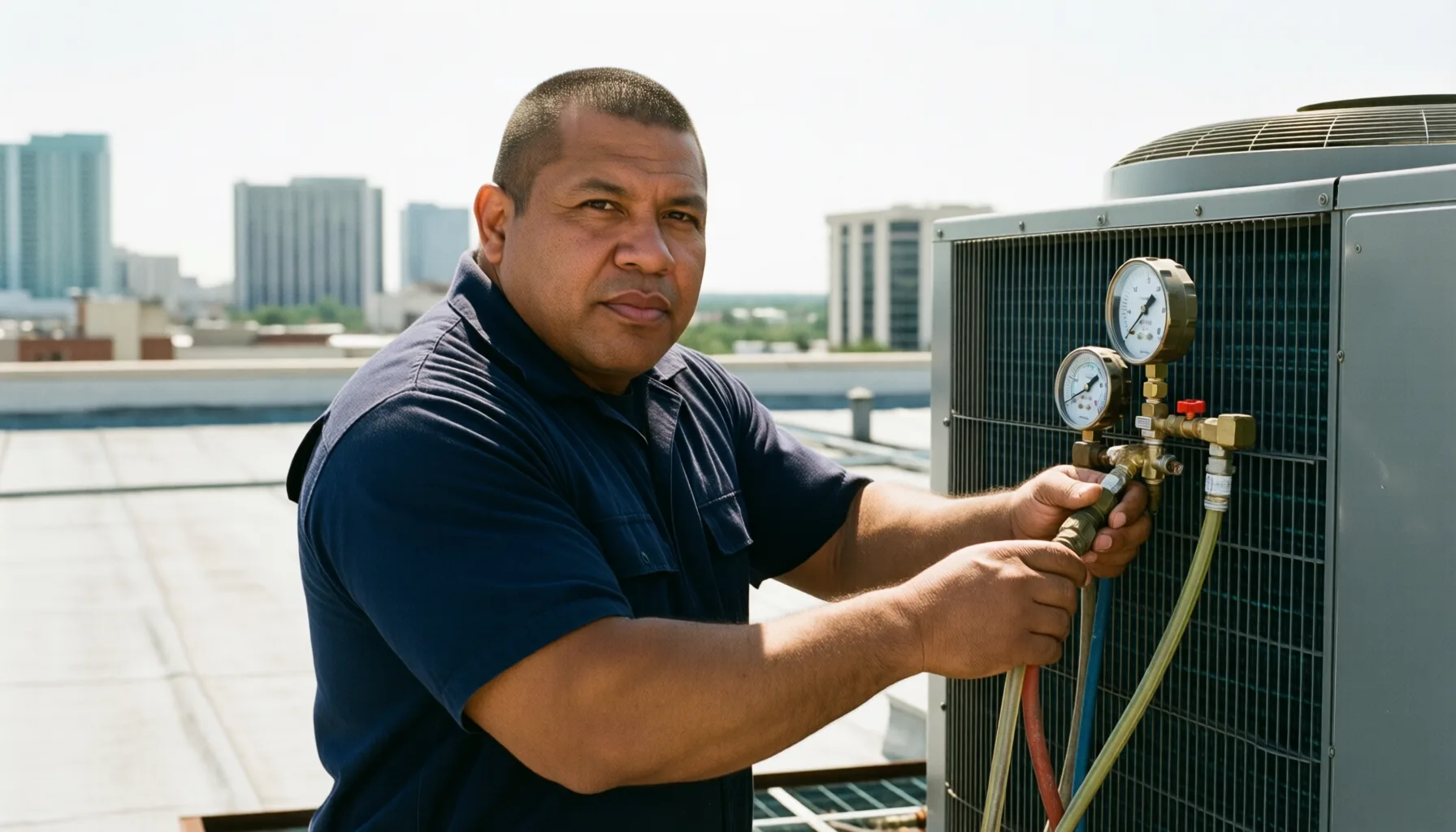
The R-410A to R-454B Transition: What Tampa AC Owners Need to Know
Published: 2026-06-02 · By CoolGuys Air Conditioner Repair
As the humidity rises in Tampa during the sweltering summer months, air conditioning becomes a lifeline for residents. The introduction of R-454B as a new refrigerant presents both a transition and a challenge for many homeowners. For those relying on older systems using R-410A, understanding the implications of this shift is crucial for maintaining comfort and energy efficiency in your home.
Why This Matters for Tampa Homeowners
The transition from R-410A to R-454B is not just a technical upgrade; it directly affects the longevity and efficiency of your air conditioning system. Many older AC units, which operate comfortably with R-410A refrigerant, may struggle to function properly with the new standard. Given Tampa’s high humidity levels, this transition poses significant challenges for homeowners who face the dual pressures of elevated moisture levels and the corrosive effects of salt air.
Moreover, local storms and hurricanes can lead to rapid wear on air conditioning systems, making proper refrigerant management all the more important. The unique building structures in Tampa, such as elevated homes and moisture barriers, further complicate the issue. These factors underscore the importance of staying ahead of such changes to ensure your system remains efficient and environmentally compliant.
Investing in the guidance of a trusted local technician can help alleviate these concerns, ensuring that your air conditioning unit is up to date with industry standards and capable of handling the local climate.
Expert Solutions & Actionable Tips
1. Understanding R-454B Benefits
R-454B is touted for its lower global warming potential compared to R-410A, making it an environmentally friendly choice for Tampa homeowners. Switching to this refrigerant means not only reducing your carbon footprint but also potentially lowering energy costs. New units charged with R-454B can operate more efficiently, leading to energy savings of 5-10% annually.
Keep in mind that the average cost of replacing an older unit with one designed for R-454B can range from $3,500 to $7,000, depending on the size and brand you choose.
2. Compatibility Checks for Your AC Unit
Before making any changes, check with a professional to see if your current AC unit can handle R-454B. Many models from reputable brands are designed for both refrigerants, but others are not. A compatibility assessment is key to ensuring you don’t encounter issues down the line.
If your system needs an upgrade, connecting with local HVAC professionals can save you time and prevent costly mistakes. Expect a thorough inspection to cost around $100 to $200.
3. Consider Local AC Regulations
Tampa has specific building codes and regulations regarding refrigerants that homeowners must adhere to. Before making the switch, familiarize yourself with local legislation to ensure you remain compliant.
Your contractor should be well-versed in these regulations and able to guide you on best practices for your air conditioning system throughout the changeover process.
4. Assessing System Performance
After transitioning to R-454B, closely monitor your AC's performance. Pay attention to changes in cooling efficiency and any unusual noises that could indicate a problem. Regular inspections can help detect issues before they become serious.
In humid Tampa summers, maintaining an effective cooling system means your family stays comfortable and safe from heat-related illnesses.
5. Choosing the Right HVAC Professional
Selecting a qualified technician is crucial. Look for local providers who possess experience and certification in handling refrigerants. Referrals from neighbors or online reviews can guide you in finding a reliable technician.
The typical cost for a certified HVAC consultation to discuss your R-454B options may range between $75 and $150, but investing in expert guidance ensures longevity and efficiency for your system.
6. Maintaining Your System Post-Transition
Post-transition maintenance is essential. Ensure regular servicing, ideally once a year, to keep your air conditioning system operating efficiently. Technicians should check for leaks and ensure proper refrigerant levels.
Plan on budgeting approximately $150 to $300 annually for routine maintenance, which can extend your system's life and enhance performance and efficiency throughout Tampa's challenging climate.
Tampa Climate & Local Context
Living in Tampa means understanding the unique interplay between our weather and air conditioning systems. The coastal climate contributes to higher humidity levels and salt air that can corrode outdoor equipment. Moreover, properties often have moisture barriers and elevated structures designed to combat flooding from tropical storms and hurricanes.
Given these local factors, residents must be proactive when it comes to air conditioning repair and maintenance. Homeowners are encouraged to comply with local building codes, ensuring that all installations and repairs are up to standard.
This attention to detail can save you from unforeseen costs and extended downtimes, especially during the peak summer months, where performance is paramount.
When to Call a Professional
While DIY projects can be tempting, certain HVAC repairs are best left to professionals. If you are unsure about diagnosing refrigerant issues or comfort points, it's safer to call in the experts.
- Prior repairs have not resolved the issue.
- You suspect refrigerant leaks.
- Your AC unit is over a decade old.
- It requires frequent repairs.
- Energy bills have spiked unexpectedly.
- The system emits unusual odors or noises.
Each of these scenarios indicates that professional help is necessary to ensure safety and efficacy in restoring your air conditioning system to optimal performance.
Frequently Asked Questions
What is the difference between R-410A and R-454B?
R-410A has a higher global warming potential, while R-454B is designed to be more environmentally sustainable with a lower impact.
How can I tell if my AC unit is compatible with R-454B?
Check your user manual or consult with your HVAC technician, who can provide insights on your system's refrigerant options.
What should I do if my AC stops working after the transition?
Contact a professional immediately to assess for any issues related to the refrigerant change and to diagnose the problem accurately.
Are there any local permits required to switch refrigerants?
Yes, Tampa has local regulations regarding refrigerants, so it's advisable to consult with your HVAC contractor regarding necessary permits.
How often should I maintain my AC system?
Annual maintenance is recommended to ensure the system operates efficiently and to prolong its lifespan, especially in humid Florida conditions.
Get Expert Air Conditioning Repair Service in Tampa
As Tampa residents navigate the transition from R-410A to R-454B, the importance of seeking professional guidance cannot be understated. CoolGuys Air Conditioner Repair is here to ensure you understand every aspect of your air conditioning system. Don't hesitate to dial (656) 208-5475 for expert advice and service.
Trust the local experts at CoolGuys Air Conditioner Repair to keep your home comfortable during Tampa's humid seasons. Call us today!